
History of the Lodge

Cervantes Lodge N.º 5 stands as the culmination of over half a century of Spanish-speaking Freemasonry in New Orleans. During the early nineteenth century, the Grand Lodge of the State of Louisiana chartered several Lodges working in Spanish, reflecting New Orleans’s cosmopolitan character and close ties to the Spanish-speaking world.
The earliest of these was Numantina (“Numantian”) Lodge N.º 27, constituted in 1826 and meeting at Perseverance Hall. Although short-lived, Numantina Lodge N.º 27 laid the groundwork for later Spanish-speaking Masonic activity in New Orleans. In 1839, Amor Fraternal (“Fraternal or Brotherly Love”) Lodge N.º 4 was chartered, also working in Spanish and the Ancient and Accepted Scottish Rite. Internal dissensions, epidemics, and the departure of key members led to its eventual extinction.
In 1842, former members of Amor Fraternal Lodge N.º 4 organized Los Amigos del Orden (“Friends of Order”) Lodge N.º 5. The Lodge later passed temporarily under the jurisdiction of the Supreme Council of Louisiana during a period of Masonic turbulence in Louisiana, before being healed and returning to the Grand Lodge’s jurisdiction in 1855.
Another important strand of the Lodge’s history is Silencio (“Silence”) Lodge N.º 9, founded by Latin American Masons in the late 1850s. Silencio Lodge N.º 9 played a significant role in the spread of Scottish Rite Masonry to Mexico and other parts of Latin America before becoming a regular constituent Lodge under the Grand Lodge of the State of Louisiana in 1861.
In 1883, seeking strength through unity, Los Amigos del Orden Lodge N.º 5 and Silencio Lodge N.º 9 petitioned the Grand Lodge to consolidate. Working under dispensation, they adopted the name “Cervantes,” in honor of Miguel de Cervantes Saavedra, a figure emblematic of the Spanish intellectual and literary tradition. The Grand Lodge formally chartered Cervantes Lodge N.º 5 in 1884.
Throughout the late nineteenth and early twentieth centuries, the Lodge served as a meeting place for Masons from Spain, Cuba, and across Latin America. Its members included prominent merchants, manufacturers, physicians, lawyers, and diplomats, and the Lodge maintained close connections with other Ancient and Accepted Scottish Rite Bodies and Spanish cultural and benevolent institutions in New Orleans.
While the Lodge no longer conducts all business exclusively in Spanish, Spanish remains the language of its degree work and ceremonies.
Today, Cervantes Lodge N.º 5 continues its labors in the spirit expressed in its mid-twentieth-century history: Freemasonry recognizes no borders, no divisions of race or creed, and speaks in all languages.

Adapted from A Brief Historical Sketch of the Formation of Cervantes Lodge N.º 5, by H. Barlow Holley, Past Master.
From the Lodge Archive
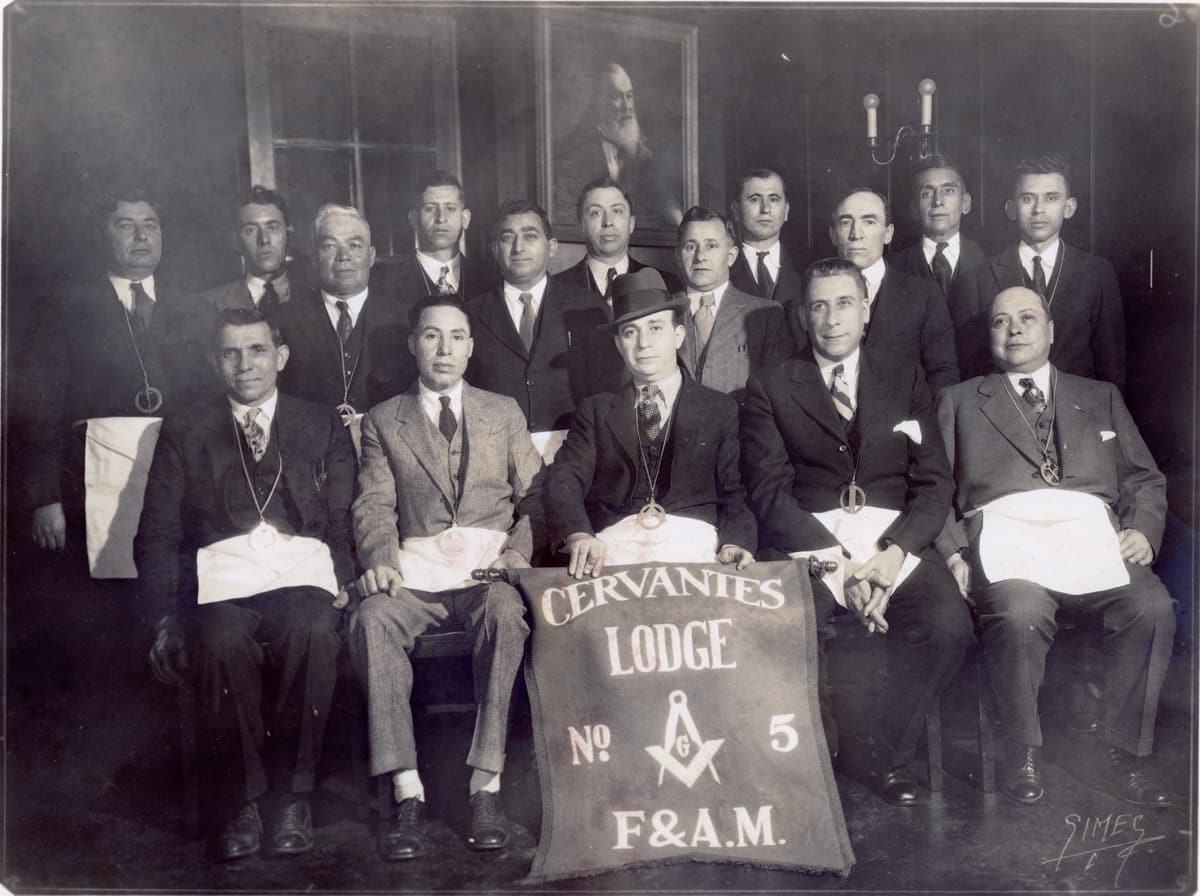
Members of the Lodge with its banner, December 1930. 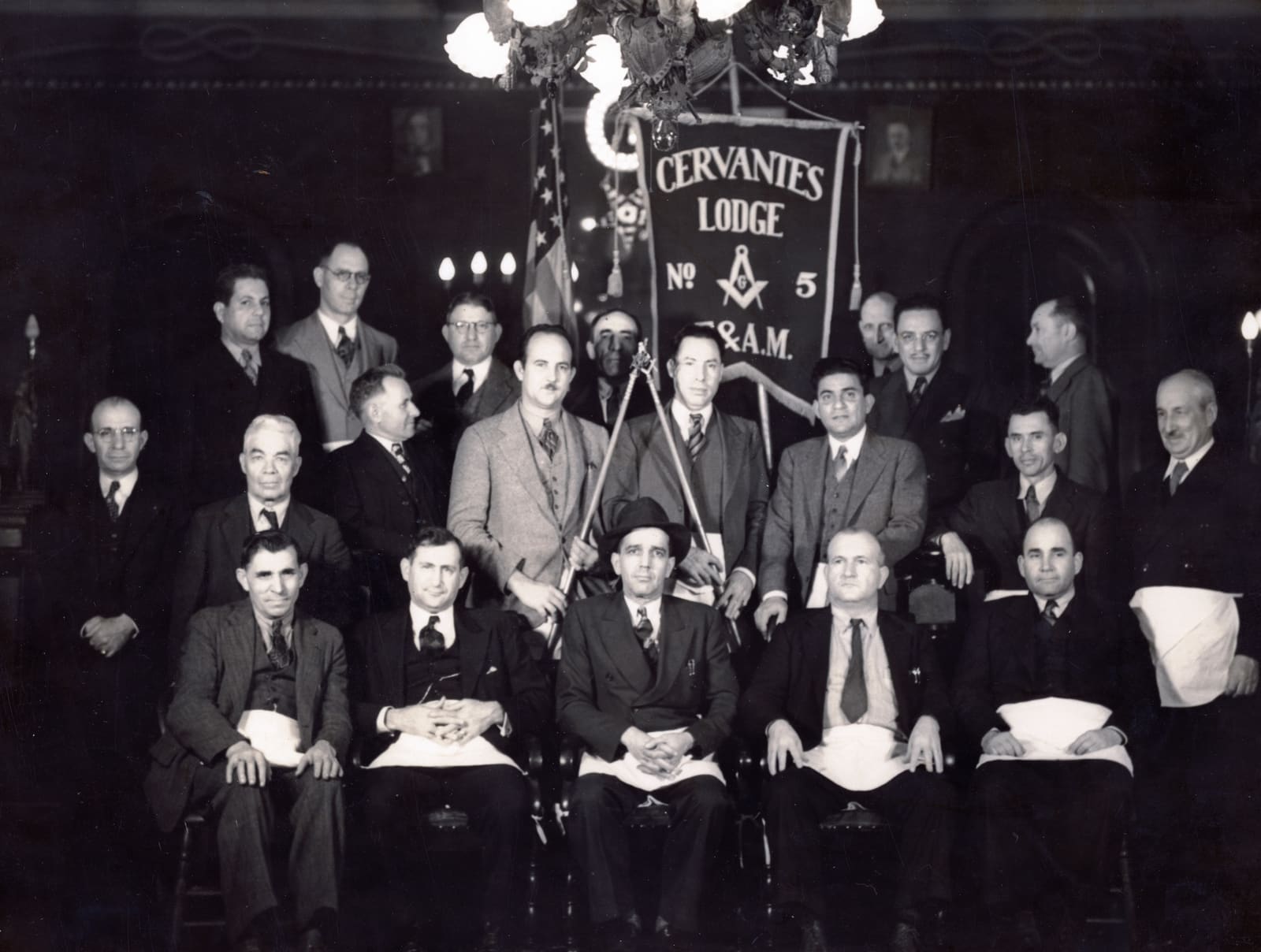
Members of Cervantes Lodge N.º 5, photographed 24 January 1938. 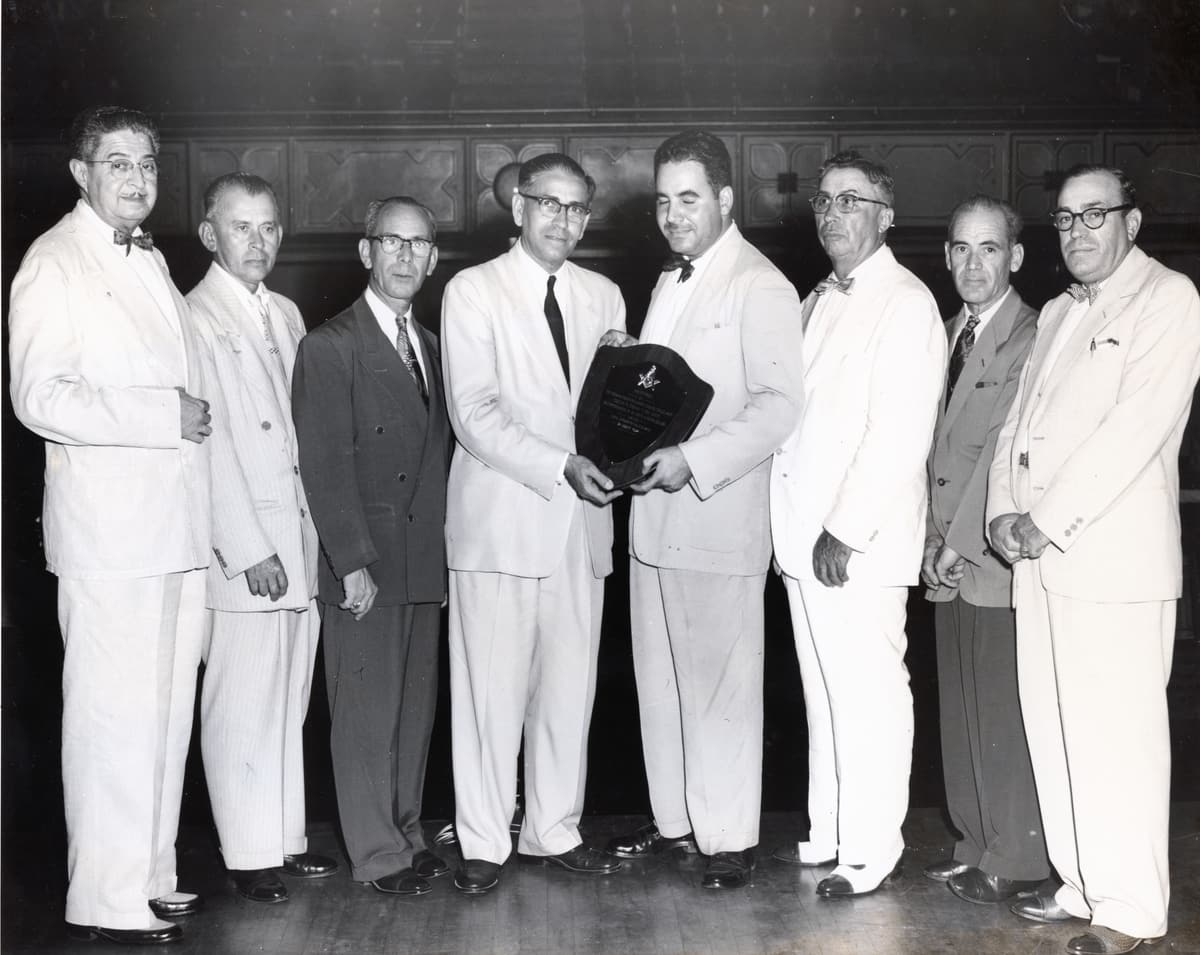
The Lodge presents a plaque to the Grand Master of Cuba, W∴B∴ Carlos M. Piñeiro y del Cueto, at the Masonic Temple, 24 August 1954. 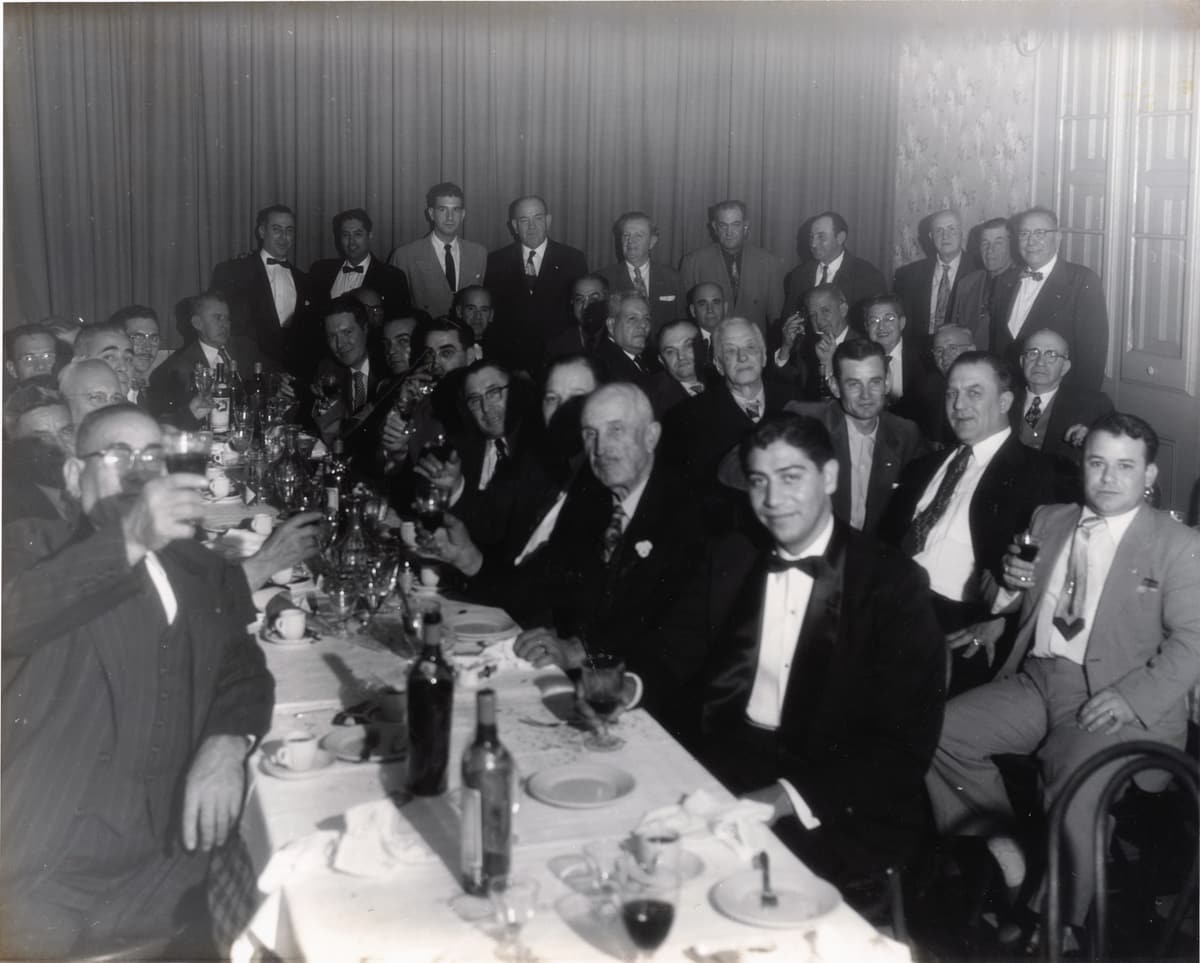
Lodge banquet, 17 December 1955. 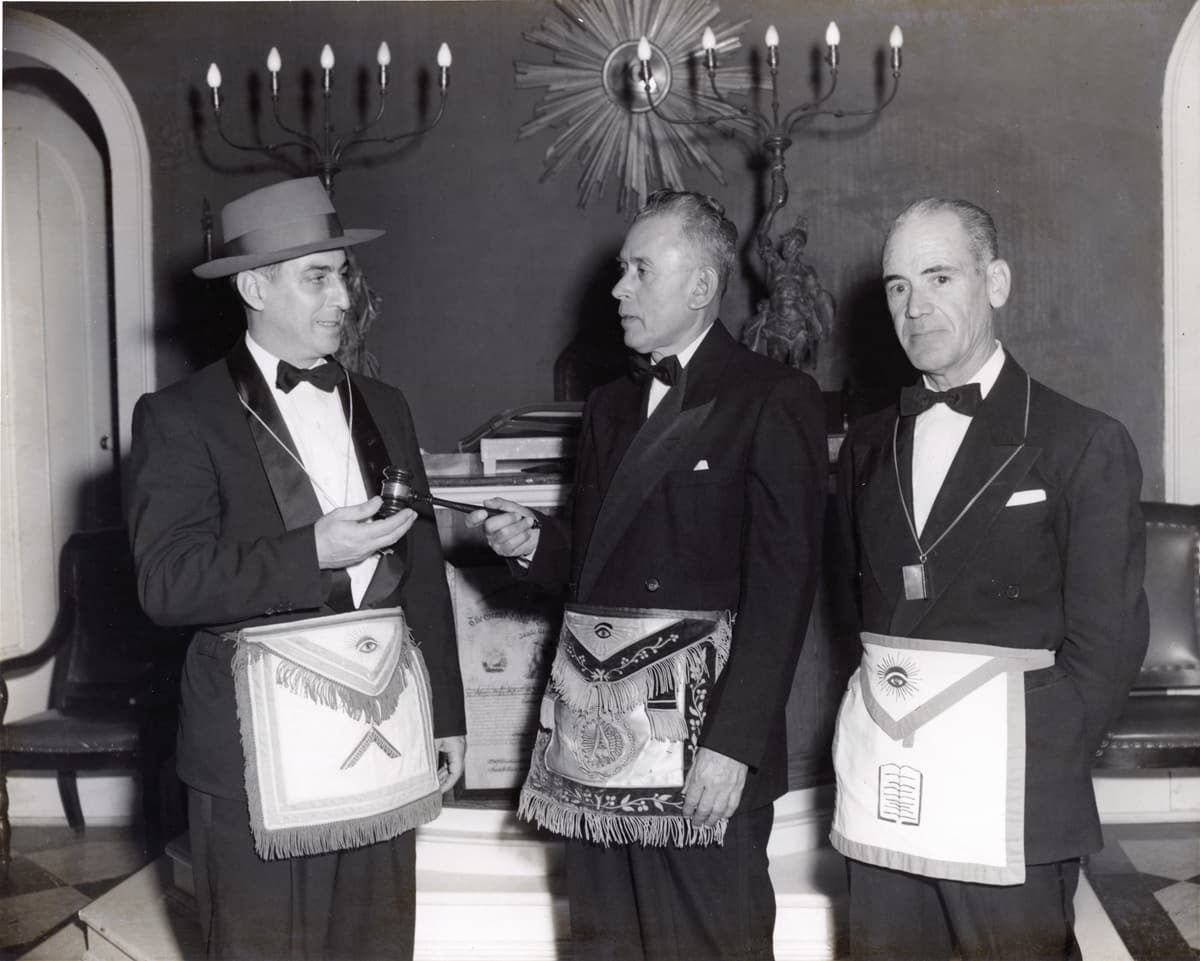
Installation of officers, 15 December 1956. 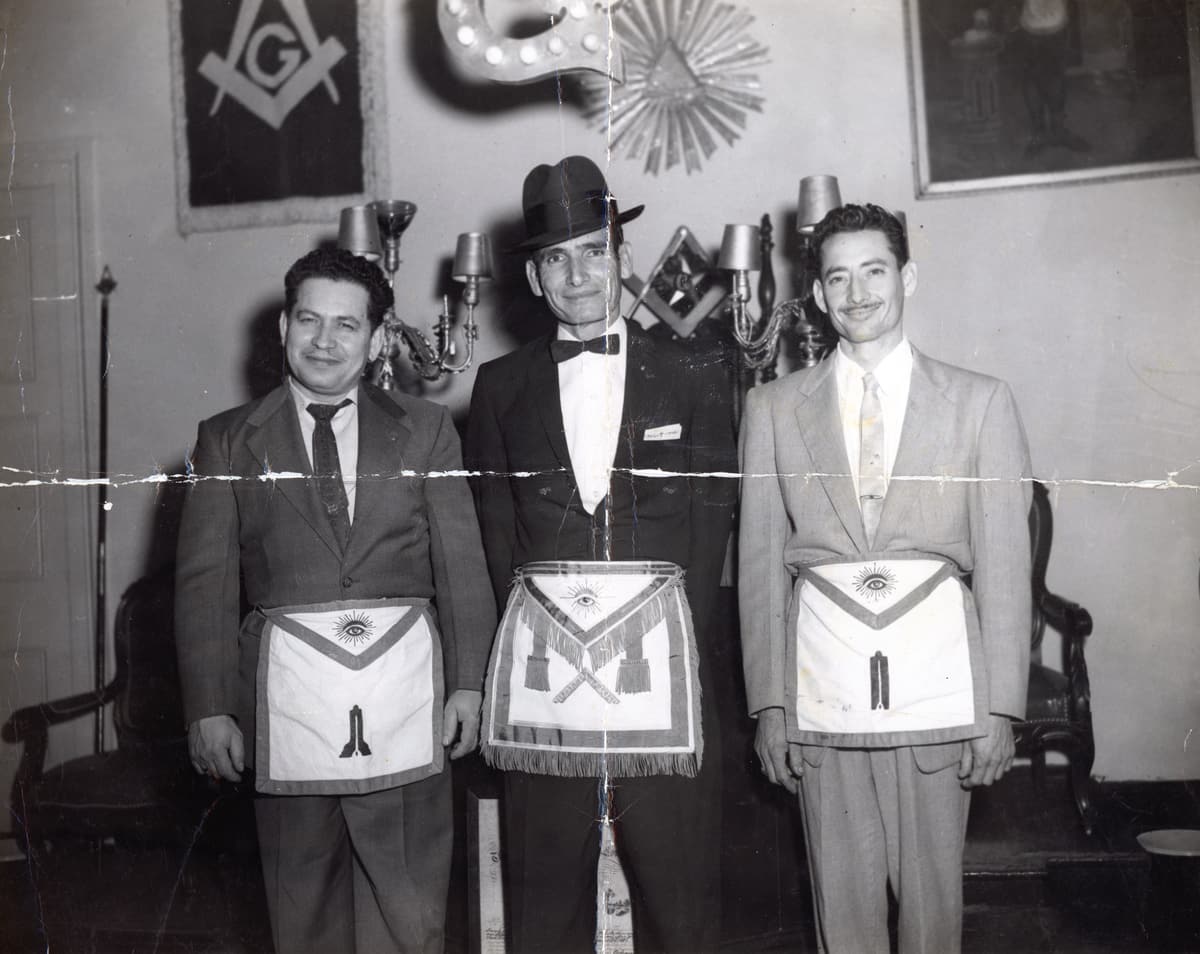
Officers of the Lodge, 1964.


Photograph 1 of 6